If you want to know how to use bp pulse charging, the answer just got simpler. bp pulse, the charging arm of the oil company, has joined ChargeHub’s Passport Hub roaming platform, so drivers can find, start and pay for sessions in the ChargeHub app instead of installing a separate bp app. InsideEVs covered the change, and bp announced it in its own press release.
The bp pulse ChargeHub app option
Through the bp pulse ChargeHub app route, drivers can see real-time port availability and the connector type at each stall, then pay in the same app. InsideEVs says ChargeHub covers more than 40 operators in the US and Canada for finding and paying, and lists another 70-plus networks, including Tesla, Ionna and Electrify America, for discovery.
An app is not required. InsideEVs notes the chargers have on-site credit card readers, so you can tap a card at the stall. The app mainly helps you plan a stop before you arrive.
How big is the network? Sources disagree
The count depends on who you ask. InsideEVs puts the network at 874 fast chargers, or nearly 900. bp’s press release says more than 850 charging points across more than 95 locations. ChargeHub’s own page lists 840 DC fast chargers in 22 states across 96 locations. We use the roughly 850 to 900 range and avoid a single exact figure.
Connectors: bp pulse NACS charger availability
This matters most if you drive a newer EV. InsideEVs says roughly a third of the fast chargers have a Tesla-style NACS connector. Most stalls use CCS1, and a few have CHAdeMO. A bp pulse NACS charger is therefore available at a minority of stalls, and a Tesla driver may need an adapter at the CCS ones. ChargeHub says its app lets you filter by connector type, which is the easiest way to avoid driving to the wrong plug.
bp pulse charging prices
A summary of the InsideEVs report that we could read quotes bp pulse charging prices of $0.33 to $0.65 per kWh, depending on location and time. We could not open the full InsideEVs article to confirm this, so treat the range as reported rather than verified, and check the price on the screen before you start. Hardware is reportedly a mix of 150 kW, 180 kW and 400 kW units. ChargeHub says every bp pulse charger on its platform can deliver over 100 kW.
Plug and Charge has limits
bp pulse supports Plug & Charge, where the car authenticates itself and billing happens automatically. According to InsideEVs, it is limited to Ford and BMW vehicles and only enabled at the fastest stalls. For other cars, use the app or a card.
A simple routine for your first session
- Open the ChargeHub app and filter for your connector type and a minimum power level.
- Check the real-time status of the stall before you drive there.
- Plug in, then start the session in the app, or use the card reader.
- Confirm the price per kWh on the charger screen before you start.
Where home charging fits
This paragraph is general advice. Public fast charging at prices of $0.33 to $0.65 per kWh will usually cost more than charging overnight at home, where many US households pay less per kWh. Fast chargers are best for road trips and for drivers without a driveway. If you can install a Level 2 charger, use public networks for the long days and home for the daily routine.
Our view, labelled as opinion: roaming makes the network less of a lock-in decision. Fewer separate apps means less friction, but check connector and price first, because the app does not change either.
Sources
- InsideEVs: Finding and using BP Pulse EV chargers just got a whole lot easier
- bp pulse press release: bp pulse joins ChargeHub’s EV roaming network
- ChargeHub: bp pulse joins ChargeHub app
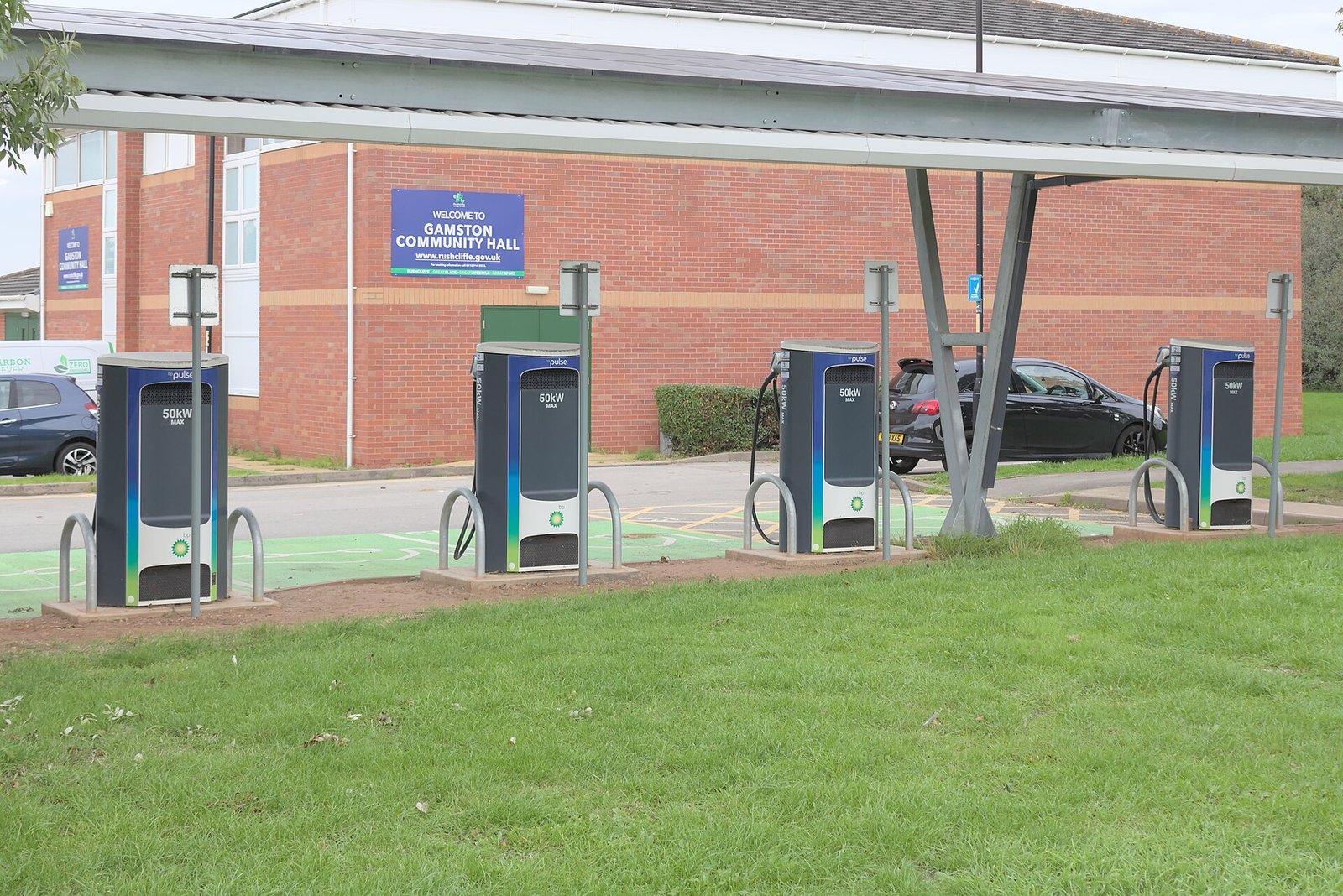
Photo: Aethonatic / Wikimedia Commons, CC0, showing bp pulse EV chargers (not necessarily a US site). Source page.