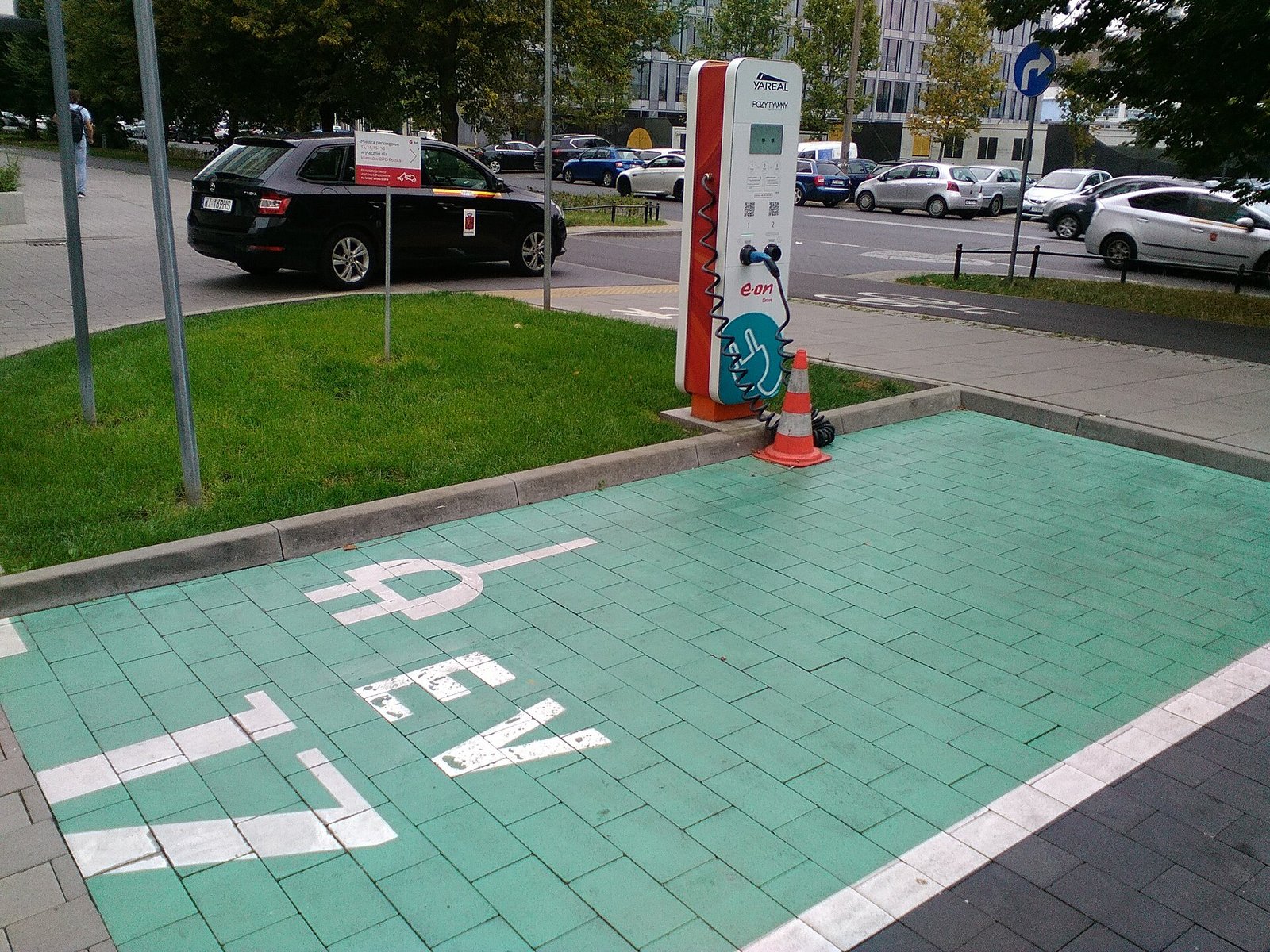
What is curbside EV charging? It is public charging installed on the street, so drivers who park on the road can plug in near home. Pennsylvania has just given the idea a boost: Electrek reports that PennDOT is putting $37 million in federal funding toward 515 new public charging ports in the Philadelphia region, including curbside Level 2 chargers.
What the Pennsylvania awards cover
The awards cover Bucks, Chester, Delaware, Montgomery and Philadelphia counties. PennDOT says they will expand public charging availability by 27% across the region and 53% in Philadelphia. The curbside pieces, per Electrek:
- It’s Electric PA received $2.93 million for 157 on-street Level 2 ports across 13 Philadelphia neighborhoods.
- Voltpost received funding for another 62 curbside ports across the four suburban counties.
- PositivEnergy received $7.2 million for 54 DC fast-charging ports at 11 Philadelphia Parking Authority lots.
- Tesla received two $392,000 awards for eight ports each, at a Royal Farms in Broomall and a Wawa in Plymouth Meeting.
Those curbside awards add up to 219 ports, which fits the brief’s description of more than 200 curbside plugs.
How to charge an electric car without a driveway
For renters, rowhouse residents and apartment dwellers, there are generally three options: a charger at work, public fast charging, or a Level 2 charger on the street near home. The curbside option is the closest substitute for a home charger, because the car sits parked for hours and Level 2 power is enough for that. Electrek describes it as somewhere to plug in while parked near home.
Owning an EV without home charging is workable today, but it takes planning. Street chargers aim to make it routine rather than a weekly errand. Neither Electrek nor PennDOT’s figures we could see say what drivers will pay per kWh, so we cannot give a cost comparison to home charging.
Why NEVI money is paying for it
The National Electric Vehicle Infrastructure program, created by the Bipartisan Infrastructure Law, first focused on fast charging along highway corridors. States can spend the money more broadly once the Federal Highway Administration certifies that corridor requirements are met. Electrek says Pennsylvania got that certification on September 22, 2025. Its five-year NEVI allocation is $171.5 million, and the state has built 54 NEVI-funded charging stations so far, more than double any other state.
That is how a NEVI curbside charging program becomes possible: corridor requirements first, community charging afterward.
Rules and timeline
PennDOT’s community charging program minimums include at least four ports per proposed station, at least 6 kW per port, two ADA-compliant parking spaces, and J1772 or CCS connectors on every port. Equipment must meet Buy America requirements. We read these as program minimums and cannot say how each curbside site will be configured.
The chargers are not built yet. PennDOT’s schedule puts environmental reviews between November 2026 and January 2027, then agreement signing in January and February. Construction and commissioning come after that. PennDOT lists 71 awards in this southeastern round, part of a roughly $100 million statewide effort. Applications for the western region close November 20, and central and eastern applications close March 12, 2027.
A note on connectors and home charging
This paragraph is general advice. Because the funded ports must have J1772 or CCS connectors, a driver of a car with a native NACS port may need an adapter at a curbside Level 2 charger. Check the connector type before relying on a street charger. If you do have a driveway or garage, a home Level 2 charger is still usually the cheapest and simplest way to charge.
Our view, labelled as opinion: the real test is reliability and price, not the headline port count. A street charger that is broken or blocked by a non-EV will not help anyone, and neither source covers how that will be managed.
Sources
Photo: E961 / Wikimedia Commons, CC BY 4.0, showing an EV charging station on Konstruktorska Street in Warsaw (not in Pennsylvania). Source page.