Tariffs on new Chinese electric cars have created an unintended opening: the used market. Electrek reports that pre-owned Chinese EVs are reaching Europe and Canada at steep discounts, and the numbers behind it are worth a closer look.
The numbers
Electrek cites data from exporter China EV Marketplace (CEVM) showing that pre-owned vehicle sales to EU customers grew 280% year over year, reaching 7,900 units through September. These are the exporter’s own figures, not an independent count.
The price gap is the draw. CEVM claims its prices average about 40% below the original Chinese list price, and its inventory reportedly holds more than 2,600 used Chinese EVs from brands including BYD, Geely and Zeekr. CEVM’s chief operating officer, Jakub Gersl, told CarNewsChina that the team regularly finds cars with around 6,000 km on the clock priced 40% below their original list price.
Why used cars avoid the tariff
Per Electrek, the EU applies tariffs of up to 45.3% on new battery-electric vehicles from China. Gersl says pre-owned cars are exempt from those additional BEV tariffs and from the new hybrid import quota, which is why his company is making used vehicles the main focus of its European business.
Electrek’s explanation for the low prices is that Chinese brands release new and updated models quickly, and that domestic buyers there place a high value on newness. That pushes nearly new cars onto the secondhand market early. This is the outlet’s reading rather than something CEVM has quantified.
Questions a buyer should ask
The source article describes the opportunity, not the risks. The following is our own analysis of what a cautious shopper should check before buying any imported used EV:
- Warranty: does the manufacturer honour coverage outside China, and for how long?
- Software: does the infotainment run in your language, and do connected features work outside China?
- Charging: which connector does the car have, and what adapter or conversion is needed locally?
- Registration: does the car meet local safety and type-approval rules in your country?
- Total cost: shipping, other duties and compliance work all add to the sticker price.
We have not verified how these points play out for specific models, so treat the list as questions to put to a seller, not as findings.
Will the gap close?
Nothing in the reporting we reviewed says regulators are moving to close the used-car route. Electrek notes only that more low-mileage, low-price Chinese EVs are probably on the way, and that this is a problem for established brands already struggling on affordability. Whether governments respond is speculation at this point.
The home charging angle
For US readers this is mostly a story about other markets, but the charging lesson travels. Before buying any imported EV, check which inlet it has, because a home wall charger or cable for one connector will not simply fit another. A home install is usually the cheapest way to charge, so the plug standard should be settled before the car is bought, not after it arrives.
Sources
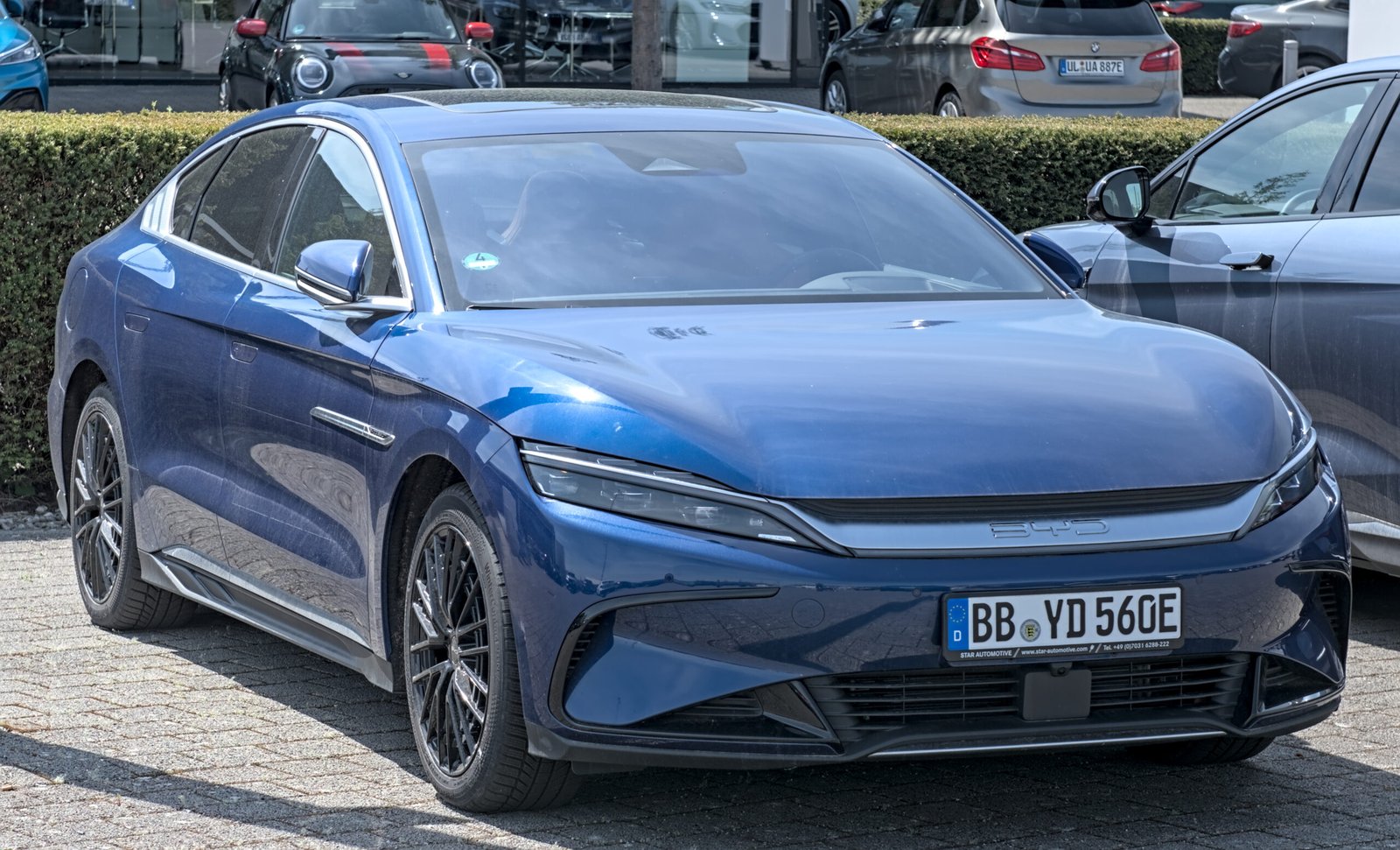
Photo (BYD Han EV, illustrative): Alexander-93 / Wikimedia Commons, CC BY-SA 4.0