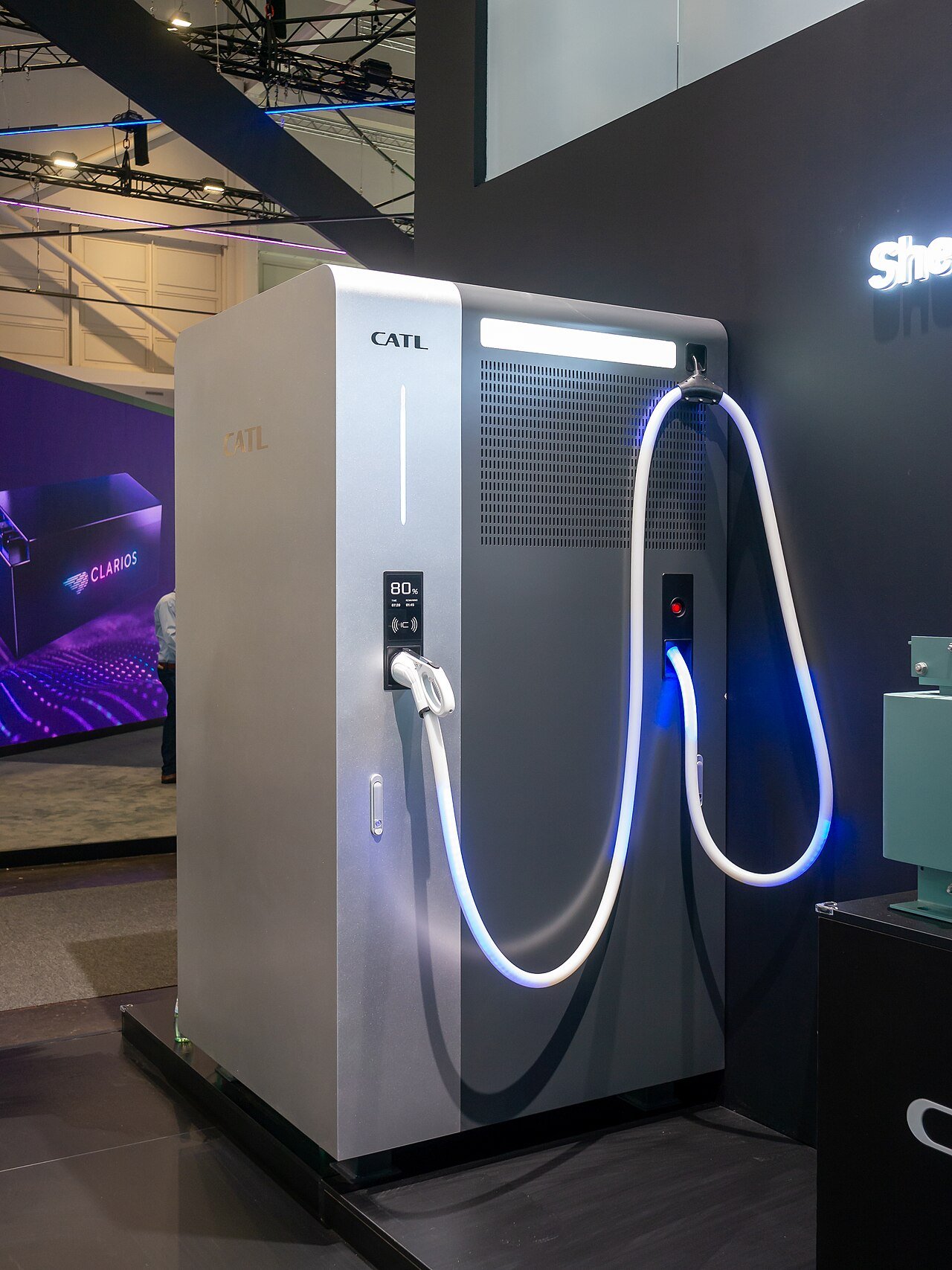
Solid-state batteries are often described as the next big step for electric cars. This week CATL gave investors an update, and Electrek’s coverage lays out how the main players line up. The short version is that 2027 is about small-scale production, not showrooms full of solid-state cars.
What CATL said
CATL is the world’s largest EV battery maker. Electrek cites SNE Research putting its share of the global EV battery market at 39.9% in the first half of 2026. Asked about its solid-state program, the company said it continues to invest heavily in all-solid-state batteries and expects to begin small-scale production in 2027. Output will be limited at first, with mass production expected around 2030.
The company’s sulfide-based cells have now entered 20 Ah trial production, aiming for an energy density of 500 Wh/kg. A 20 Ah cell is a development-stage size. The target figure is a goal, not a measured result for a product you can buy.
CATL chairman and CEO Robin Zeng said at the Summer Davos Forum in June that on a scale of one to nine, all-solid-state batteries have only reached level four. According to Electrek, a remaining hurdle with sulfide systems is keeping stable contact between the solid components.
Solid-state versus semi-solid-state
The difference is the electrolyte, the material that carries lithium ions. All-solid-state cells use a solid electrolyte. Semi-solid-state designs still involve a liquid component. Companies promise solid-state cells that are safer, more efficient and cheaper than today’s lithium-ion packs, though the article frames those as promises rather than proven results.
How the competitors compare
- Toyota: aims to launch its first all-solid-state EV in 2027 or 2028. It has claimed a prototype can deliver 745 miles of range and charge in under 10 minutes. Production is expected to be limited, with mass-market availability closer to the end of the decade.
- Samsung SDI: aims to begin mass production of its SolidStack all-solid-state batteries in the second half of 2027.
- BYD: plans to launch its first solid-state-powered vehicle in 2027. Executive vice president Stella Li told Carwow.es that BYD is in the leading position and will prove it next year. Its battery division FinDreams aims to produce sulfide-based all-solid-state batteries in limited batches in 2027, ramping up to mass production by 2030.
These are company claims and targets. Treat the Toyota range and charging figures in particular as manufacturer claims about a prototype.
What this means for buyers
This section is my analysis. The key phrase is small-scale production. It suggests low volumes, likely in a small number of vehicles, and probably at higher prices than mainstream EVs, though no source gives pricing. If you are shopping for a car now, waiting for solid-state is not a practical plan. Electrek’s own take, in the closing section of its article, is that solid-state batteries are only one part of the equation. Charging networks, price and software all matter too.
Home charging
Nothing in the sources suggests solid-state cars will need different home equipment. A Level 2 home charger is a car-side question of connector and onboard charger limits, and neither is addressed here. If you buy an EV today, you can install a charger knowing it should not be made obsolete by battery chemistry alone, but that is a reasonable inference, not a stated fact.
Bottom line
Three of the biggest names, CATL, BYD and Toyota, all point at 2027 or 2028 for first limited launches, and at about 2030 for the mass market. Between now and then, expect announcements, prototypes and pilot lines rather than affordable cars.
Sources
Photo: Matti Blume / Wikimedia Commons, CC BY-SA 4.0 (CATL stand at IAA 2024, Hanover). Source page.