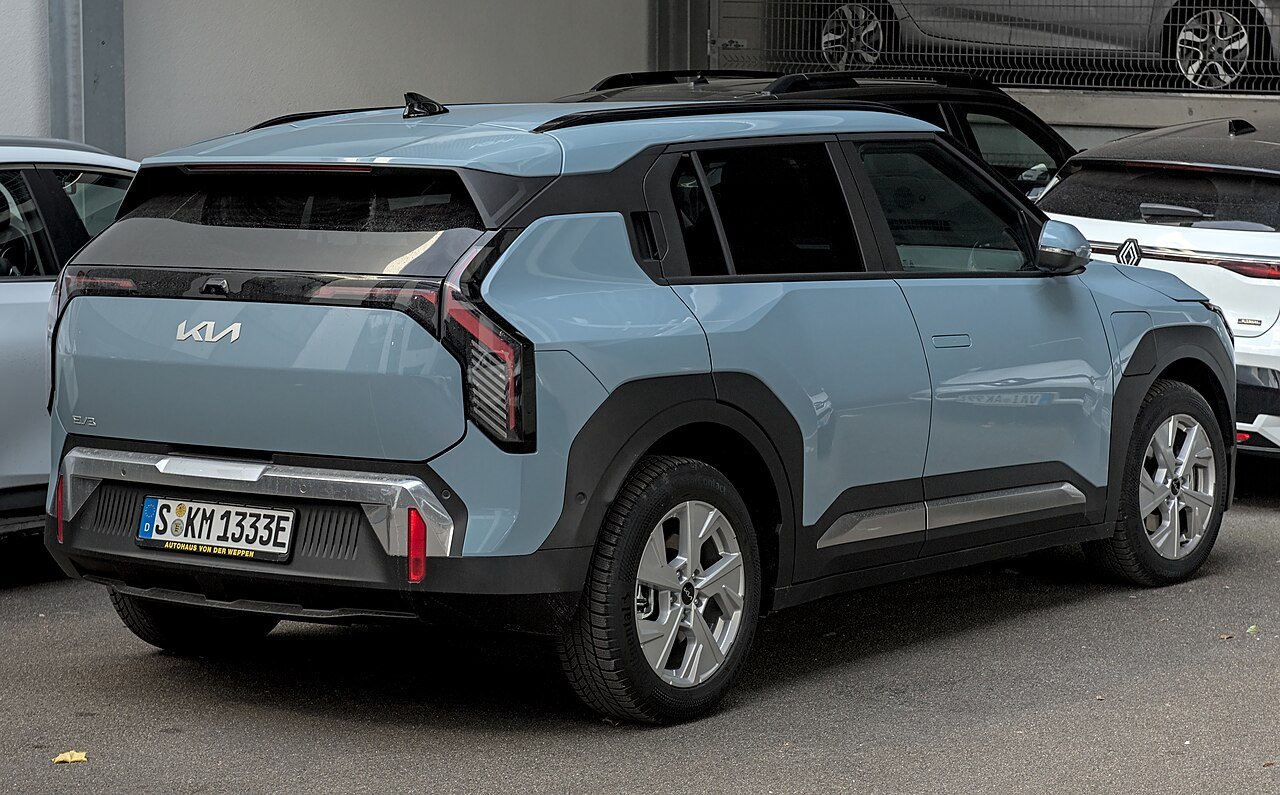
Kia has announced 2027 pricing for the EV6, and the headline is that nothing changed. As Electrek reports, the EV6 is a carryover model, and prices stay the same across all trims after a $5,000 cut on the 2026 model year a few months ago. With the new EV3 starting at $29,890, the gap between Kia’s two electric SUVs is about $8,000. Here is how the two compare on the numbers published so far.
The price gap
The base EV6 Light standard-range RWD starts at $37,900, not counting a $1,545 destination fee. The EV3 starts at $29,890, so the difference at the bottom of each range is $8,010 before fees. EV6 prices climb from there:
- EV6 Light long-range RWD: $41,200, up to 319 miles
- EV6 Wind RWD: $44,800, up to 319 miles
- EV6 GT-Line AWD: $53,000, up to 270 miles
These are starting prices from Electrek’s table, which marks them with an asterisk and a note that the destination fee is excluded. Check Kia’s configurator for what you would actually pay, including any incentives.
Range and battery
The cheapest EV3, the Light FWD, uses a 58.3 kWh battery and has an EPA-estimated range of up to 221 miles. Higher EV3 trims (Wind, Land, GT-Line and GT) use a larger 81.4 kWh pack rated up to 321 miles, according to the same article.
The base EV6 uses a 63 kWh battery for up to 237 miles. Step up to the 84 kWh pack and the rating is up to 319 miles in rear-drive form, or 295 miles with all-wheel drive.
That comparison shows that range alone does not justify the EV6 premium. A larger-battery EV3 is rated for a similar distance to a long-range EV6. The sources do not give EV3 prices for those higher trims, so a direct like-for-like price comparison is not possible yet.
Charging: 400V versus 800V
This is the real technical difference. The EV6 uses an 800V architecture, which Electrek says enables faster charging than the EV3’s 400V system. The article does not publish charging times or peak kilowatt figures for either car, so I will not quote any. One reader comment on the article, from an owner of a different 800V car, described road-trip stops of about 20 minutes from 15% to 85%. That is one person’s experience in another vehicle, not a Kia figure.
Both cars have a native NACS port, so they can use Tesla Superchargers without an adapter.
Interior and tech
The two share Kia’s ccNC infotainment system, with nearly 30 inches of screen space in a curved panoramic display: dual 12.3-inch screens for the instrument cluster and navigation, plus a 5-inch climate touchscreen. On technology, the EV6 premium does not buy a different screen setup, based on the source.
Home charging
Since both cars have the NACS port, a home charger with a NACS plug, or a J1772 unit with the right adapter, would be the thing to check before buying. The sources do not discuss home charging speeds, so confirm onboard charger specs with a dealer. As general advice and not from the article: most owners charge overnight, and for a driver who rarely road-trips, the 800V advantage matters less than it does for someone making frequent long runs.
Who should pick which
This is my analysis. If most of your driving is commuting and you charge at home, the EV3 gets you a native NACS port, the same screens and a lower price. If you often take long highway trips and want the fastest stops, the EV6 is the one with the 800V system. The $8,000 is the price of that charging architecture and the EV6’s body, not of range or screens.
Sources
Photo: Alexander Migl / Wikimedia Commons, CC BY-SA 4.0 (a Kia EV3). Source page.