ChargePoint has announced a fast charger that can send 750 kW to a single plug. The number is eye-catching, but for most drivers the more useful part of the story is how the station shares power. This explainer draws on InsideEVs’ report.
What the Express Solo is
The Express Solo was developed with Eaton. InsideEVs says it puts the charger and power conversion equipment in one enclosure, removing the need for a large separate power cabinet. ChargePoint says that means less wiring and groundwork, and lets operators add plugs without installing another full charger. ChargePoint calls it the most powerful standalone charger in the U.S.
Configurations
It comes in 200, 400 and 600 kW versions that can deliver up to 800 amps. The 750 kW figure needs at least two connected stations working together.
Why 750 kW is not for your car
Per the report, paired stations share available power across up to four connected vehicles, so all four will not get 750 kW at once. A vehicle can only pull the peak if it can accept that power and few others are plugged in. InsideEVs notes that would not be a passenger car, but something like the Tesla Semi, which it says can pull over a megawatt.
The practical point for car drivers is simple: a more powerful charger will not shorten your stop if your EV cannot accept the extra power. Your car’s own maximum charge rate is the limit.
Dynamic power sharing
The more relevant feature is that the system can steer power toward the vehicle that can use it. If one car takes only a modest rate, more of the output can go to another. InsideEVs gives the familiar example of a slow-charging car occupying a 350 kW stall while faster cars wait.
Our analysis, which is opinion: if this works as described, shorter queues are a more likely benefit than faster individual sessions, because fewer high-power stalls would sit underused. Real-world results will depend on how operators configure stations.
Other features
- An Omni Port system of built-in adapters offers both CCS and NACS connectors.
- Cables hang from moving arms so the plug can reach different charge-port locations.
- Cut-resistant cables and an alarm that uses the station’s speakers, screen and lights are meant to deter vandalism.
- Solar and battery storage integration could lower operating costs and reduce reliance on expensive grid power, according to the report, building on an earlier ChargePoint and Eaton microgrid announcement.
What it signals for trucking
With a megawatt-class truck like the Semi named as the likely user of the peak figure, the Solo points to heavy-duty and fleet charging as a target. The report does not name customers or give a rollout schedule or pricing, so treat deployment timing as unknown.
What it means for home charging
Home charging runs at a completely different scale. A typical Level 2 home charger is a small fraction of a single DC fast-charging stall, and it suits overnight charging. Public chargers like this one matter mainly for road trips and fleets. The connector point is relevant, though: the Omni Port supporting both CCS and NACS reflects the same transition that is changing which plug cars ship with.
Sources
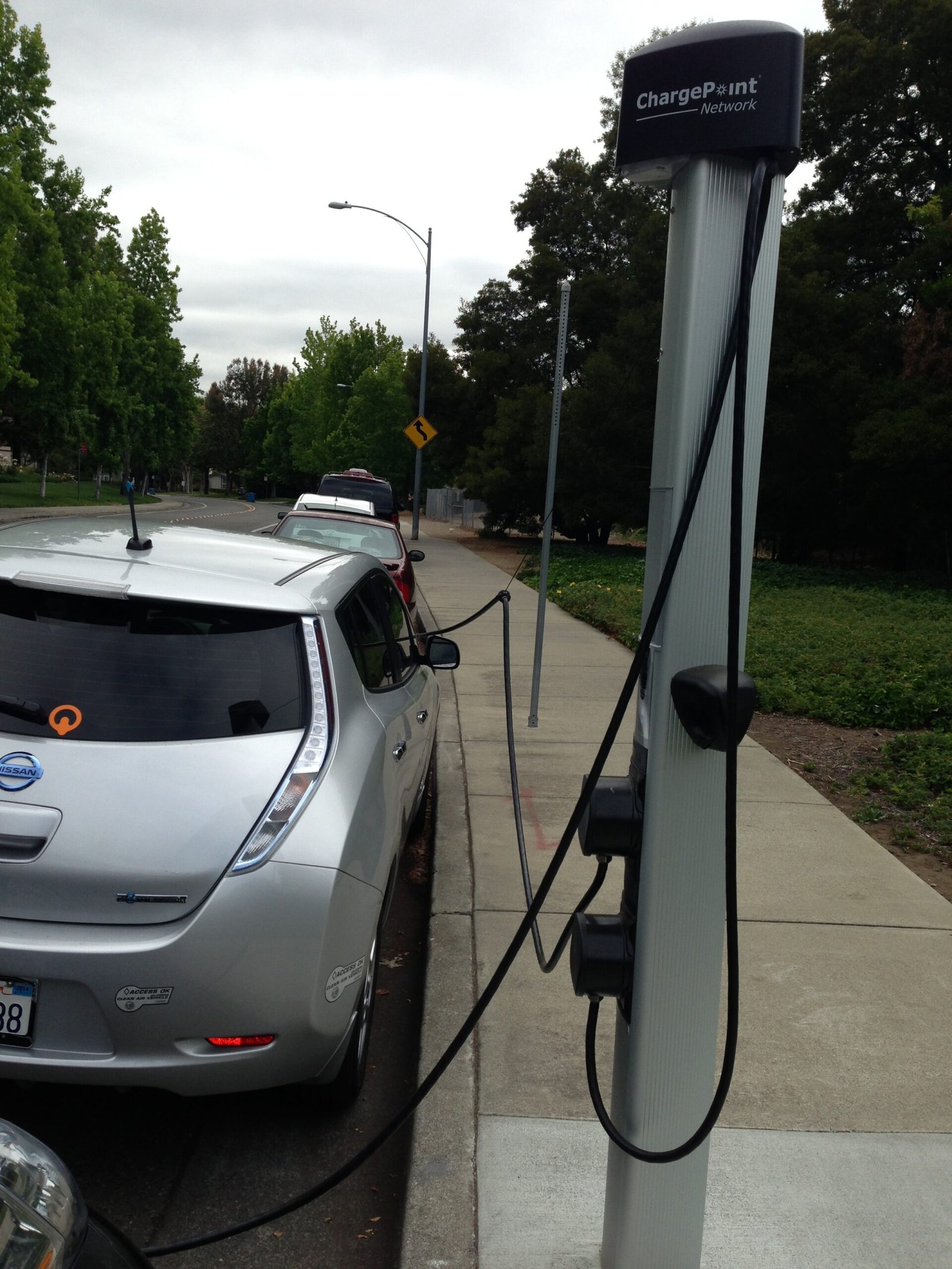
Photo: Kowloonese / Wikimedia Commons, CC BY-SA 3.0. File photo of an older ChargePoint station, not the Express Solo.